

Freshly baked cookies have a distinctive appeal: crisp or tender edges, a soft center, and an aroma that seems to linger long after the box has been opened. However, when cookies are left exposed to air, their texture can change surprisingly quickly. Moisture migrates, the exterior becomes firmer, and the once-plush center can lose much of its original softness.
Knowing how to store crumbl cookie flavors this weekso they stay fresh and soft can make a substantial difference, especially when several cookies are purchased at once or when a few are being saved for later. With the right container, temperature, and storage method, those oversized cookies can remain enjoyable rather than becoming dry, stale, or oddly textured.
Why Proper Cookie Storage Matters
Cookies are surprisingly sensitive to their surroundings. Air exposure, humidity, temperature fluctuations, and improper packaging can all influence their texture. A soft cookie gradually loses moisture when exposed to dry air, while a cookie stored in an excessively humid environment may become gummy or lose its desirable surface texture. This delicate equilibrium is why simply leaving cookies in their original box overnight is not always the best strategy. Proper storage creates a controlled environment that slows these textural changes and helps preserve the cookie’s original character.
Let Warm Cookies Cool Before Storing Them
If the cookies are still warm, avoid immediately sealing them inside an airtight container. Warm cookies release moisture as they cool. If that moisture becomes trapped inside the container, condensation can accumulate and create an overly damp environment. Frosting may soften excessively, toppings can become sticky, and the cookie itself may develop an undesirable texture. Allow freshly purchased or warmed cookies to cool to approximately room temperature before placing them into long-term storage. There is an important distinction, however: cooling does not mean leaving them exposed for hours. Once the cookies have cooled sufficiently, they should be protected from unnecessary air exposure.
Use an Airtight Container
One of the most effective ways to preserve cookie softness is to minimize contact with air. An airtight food-storage container works particularly well because it creates a relatively stable microenvironment around the cookies. Instead of allowing moisture to continually evaporate into the surrounding room, the container helps retain some of the cookie’s natural moisture.
Choose a container that is:
- Airtight and food-safe
- Large enough to avoid crushing the cookies
- Clean and completely dry
- Easy to seal securely
- Deep enough for frosted or heavily decorated cookies
Avoid containers with loose-fitting lids, because even small gaps can accelerate staling.
Separate Different Cookie Flavors
Storing different flavors together may seem harmless, but it can create an unexpected problem: flavor transfer. Strongly flavored cookies can influence neighboring cookies, particularly when they remain sealed together for an extended period. Ingredients such as mint, citrus, peanut butter, spices, chocolate, and strongly flavored frostings can have pronounced aromatic profiles. For the best results, separate cookies by flavor when possible. Individual containers or separate compartments are particularly useful when storing several varieties. This is especially worthwhile when one cookie has a delicate flavor and another has an intense filling or frosting.

Place Parchment Between Cookies
Large, soft cookies can stick together when stacked, especially when they contain frosting, glaze, caramel, chocolate, or other toppings. A simple sheet of parchment paper between each cookie provides a protective barrier. It prevents surfaces from adhering to one another and reduces the possibility of damaging decorative toppings when cookies are separated.
For particularly delicate cookies, store them in a single layer rather than stacking them. If stacking is necessary, use parchment between every layer and avoid placing heavy objects on top of the container.
Should Crumbl Cookies Be Refrigerated?
Refrigeration is not always necessary. For crumbl menu that are primarily dough-based and do not contain ingredients requiring refrigeration, room-temperature storage in an airtight container is often preferable for preserving a soft texture. However, some cookies may contain toppings, fillings, or perishable components that are better kept chilled. In those cases, refrigeration can be the safer choice. The drawback is that refrigeration can make cookies feel firmer because cooler temperatures affect the texture of fats and other ingredients. If a cookie has been refrigerated, allowing it to return to room temperature before eating can restore much of its softness.
How to Store Cookies at Room Temperature
For short-term storage, room temperature is generally convenient and effective.
After the cookies have cooled:
- Place them inside an airtight container.
- Separate layers with parchment paper.
- Keep the container away from direct sunlight.
- Avoid placing it near a stove, oven, radiator, or other heat source.
- Store the container somewhere cool and dry.
- Keep the lid firmly sealed between servings.
This method is particularly useful when the cookies will be eaten within a day or two. The key principle is simple: stable conditions are better than constant environmental changes.
How to Refrigerate Crumbl Cookies Properly
When refrigeration is appropriate, packaging becomes even more important. First, allow the cookies to cool completely. Then place them in an airtight container, using parchment between layers if necessary. Do not leave cookies uncovered inside the refrigerator. Refrigerators contain circulating air and a mixture of food aromas, both of which can negatively affect exposed cookies. Once refrigerated, allow the cookie to sit at room temperature for a short period before eating if a softer texture is preferred. For some varieties, gentle warming can be even more effective.
The Best Way to Freeze Crumbl Cookies
Freezing is an excellent option when cookies need to be preserved for considerably longer.
The process should be methodical:
Cool Completely
Never freeze cookies while they are still warm. Excess moisture can become trapped and eventually contribute to ice formation.
Wrap Individually
Wrap each cookie tightly using freezer-safe wrapping material. Individual wrapping helps prevent freezer burn and protects the cookie from absorbing surrounding odors.
Add an Airtight Outer Layer
Place the individually wrapped cookies into a freezer-safe airtight container or freezer bag.
Label Them
Write the cookie flavor and storage date on the container. This small step prevents the mysterious accumulation of unidentified frozen cookies.
Freeze Flat
If possible, arrange cookies in a stable position so their toppings and decorations remain intact. Properly packaged cookies can retain considerably more of their original quality than cookies simply placed uncovered in a freezer.
How to Thaw Frozen Cookies
Thawing deserves almost as much attention as freezing. The easiest approach is to remove the desired cookie from the freezer and allow it to thaw while still wrapped. Keeping it wrapped during the initial thawing period helps reduce condensation directly on the cookie’s surface. Once the cookie has reached room temperature, unwrap it and enjoy it. For certain varieties, a brief period of gentle warming can bring back a more freshly baked sensation.
Can You Reheat Stored Crumbl Cookies?
Yes, gentle reheating can improve the texture of some stored cookies. A microwave can be useful because it warms cookies quickly, but restraint is essential. Excessive heating can transform a soft cookie into a tough or rubbery one. A practical approach is to warm the cookie for only a few seconds, check its texture, and add additional time if necessary.
The objective is not to make the cookie hot; it is to gently restore warmth and softness. For cookies with frosting or delicate toppings, reheating should be particularly conservative because excessive heat can cause toppings to melt or slide.
Avoid These Common Storage Mistakes
Even a high-quality cookie can deteriorate rapidly when stored incorrectly.
Leaving Cookies in an Open Box
The box may be convenient, but prolonged exposure to room air encourages moisture loss.
Using a Container That Is Too Large
Excess empty space means more air surrounding the cookies. A reasonably sized container is preferable.
Stacking Frosted Cookies Directly
This can cause frosting and toppings to stick together, resulting in damaged cookies when separated.
Storing Cookies Near Heat
Warm environments accelerate texture changes and can cause frosting, chocolate, or fillings to soften.
Refrigerating Every Cookie Automatically
Cold storage is not universally better. For many soft cookies, unnecessary refrigeration can make the texture firmer.
Freezing Without Proper Wrapping
Unprotected cookies can suffer from freezer burn, dehydration, and odor absorption.
How Long Do Stored Crumbl Cookies Stay Fresh?
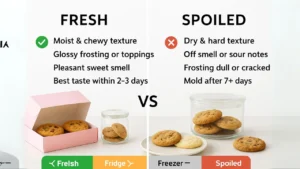
The precise storage life varies according to the cookie’s ingredients, toppings, fillings, and storage conditions. For the best texture, soft cookies are generally most enjoyable when consumed relatively soon after purchase. Room-temperature storage is suitable for short-term enjoyment, while refrigeration can be useful for varieties with perishable components. Freezing is the better option when the goal is to preserve cookies for a substantially longer period. Rather than relying solely on a specific number of days, pay attention to texture, aroma, appearance, and ingredient requirements. If a cookie develops an unusual smell, visible mold, or other signs of spoilage, it should not be eaten.
How to Keep Frosted Cookies From Getting Messy
Frosted cookies require additional care because their decorative surfaces can be delicate. A shallow airtight container can be particularly useful because it reduces the need to stack cookies. If stacking cannot be avoided, parchment paper should separate each layer. Another useful technique is to position cookies carefully so that frosting does not press against another cookie. For cookies with elaborate toppings, maintaining physical separation is just as important as controlling moisture.
A Simple Storage Method for Everyday Use
For someone who simply wants a dependable method without complicated preparation, the following routine works well:
- Cool → Separate → Seal → Store → Rewarm
Allow the cookies to cool completely, place parchment between them, seal them in an airtight container, store them away from heat and sunlight, and gently warm individual cookies when desired. This straightforward approach minimizes moisture loss while protecting the cookie’s structure and toppings.
How to Make Stored Cookies Taste Fresh Again
Storage preserves quality, but a little preparation before serving can make the experience even better. If the cookie has been stored at room temperature, it may already be ready to eat. If refrigerated, allow it to warm naturally or use gentle heating. If frozen, thaw it completely before evaluating the texture. A cookie that initially feels firm after coming out of the freezer may soften considerably as it reaches room temperature. The goal is to restore the cookie to a comfortable serving temperature rather than aggressively reheating it.
Best Storage Method by Situation
| Situation | Recommended Method |
|---|---|
| Eating later the same day | Airtight container at room temperature |
| Keeping cookies for a day or two | Airtight container with parchment |
| Cookie contains perishable toppings | Refrigerate as appropriate |
| Saving cookies for longer-term storage | Freeze individually wrapped |
| Frosted cookies | Keep separated and avoid direct stacking |
| Refrigerated cookie feels firm | Allow it to return toward room temperature |
| Frozen cookie | Thaw while wrapped before serving |
Tips for Keeping Crumbl Cookies Soft
The most effective storage strategy is not complicated; it is about controlling the cookie’s environment. Keep cookies protected from excessive air exposure, avoid unnecessary temperature fluctuations, separate delicate toppings, and choose refrigeration or freezing according to the ingredients and intended storage period. For short-term storage, an airtight container is usually the simplest solution. For longer preservation, careful freezing provides a much more effective barrier against dehydration and staleness. Most importantly, don’t let a good cookie become an afterthought. A little attention to storage can preserve the tender center, appealing texture, and rich flavor that make oversized bakery-style cookies so enjoyable in the first place.

Meet the Author
Kashif Ali
Content Researcher & Editor
Kashif Ali is the founder and editor of Crumbl Cookie Menus. He specializes in researching Crumbl weekly flavors, cookie reviews, nutrition information, and dessert trends. Through detailed research and regular content updates, she helps readers stay informed about the latest menu changes and bakery-related topics.
📧 contact@crumblcookiemenus.com


How to Store Crumbl Cookies So They Stay Fresh and Soft